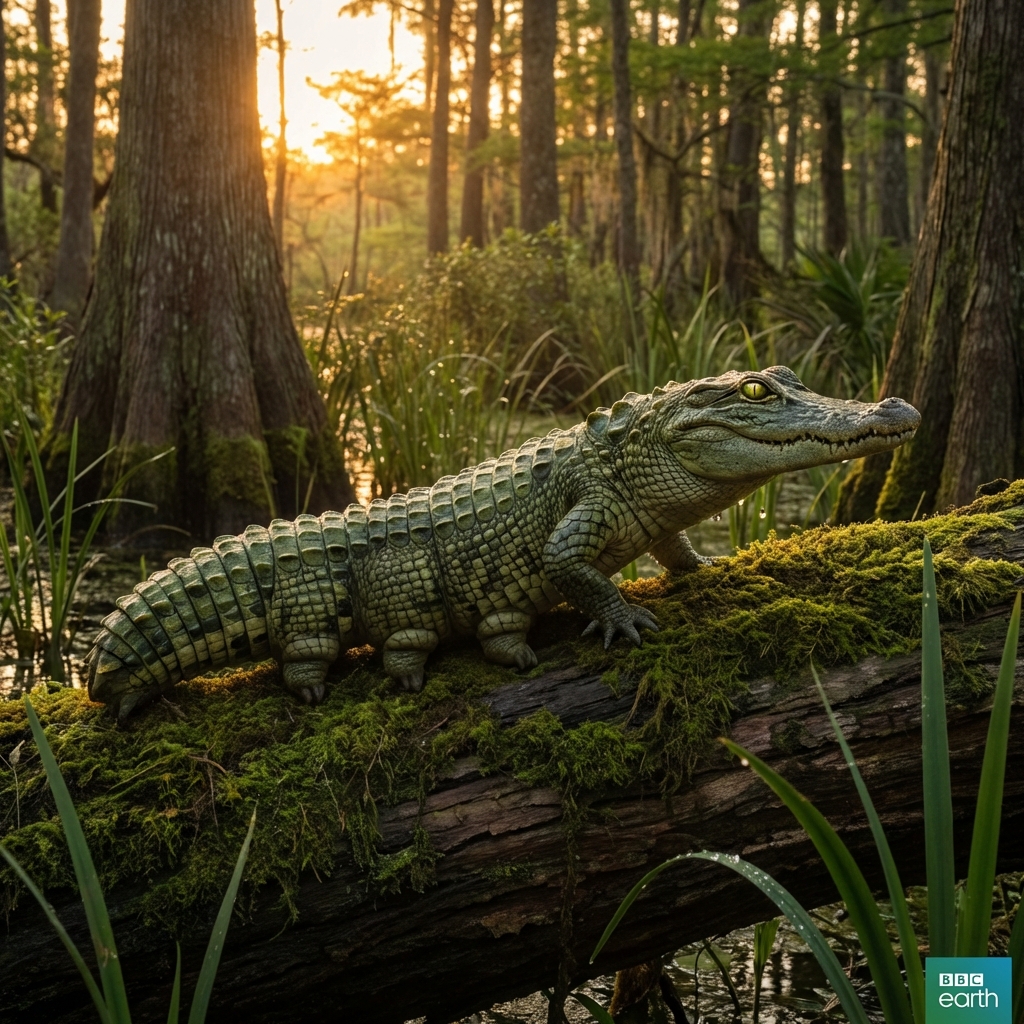
Near ThreatenedCrocodolepis
Alligator metamorphosis
Alligaterpillar
Discovery LocationThe murky swamps of the Florida Everglades' interior.
Lead ResearcherProfessor Jian Li
Field Report Summary
This multi-legged reptile is actually a larval stage of a much larger, unknown swamp creature. It moves slowly along cypress knees, grazing on moss and unsuspecting frogs. Its segmented body allows it to wrap around tree trunks to sun itself. If disturbed, it emits a foul-smelling musk from its horn.
Physical Description
Elongated, segmented alligator body with twelve pairs of stubby legs.
Habitat
Freshwater Swamps
Dietary Behavior
It voraciously consumes large insects and small amphibians.
Evolutionary Origin
A developmental anomaly where a caterpillar's larval stage became dominant, incorporating crocodilian genetic material from contaminated water sources.
Behavioral Notes
Secretes a potent musk to deter predators and attract mates.