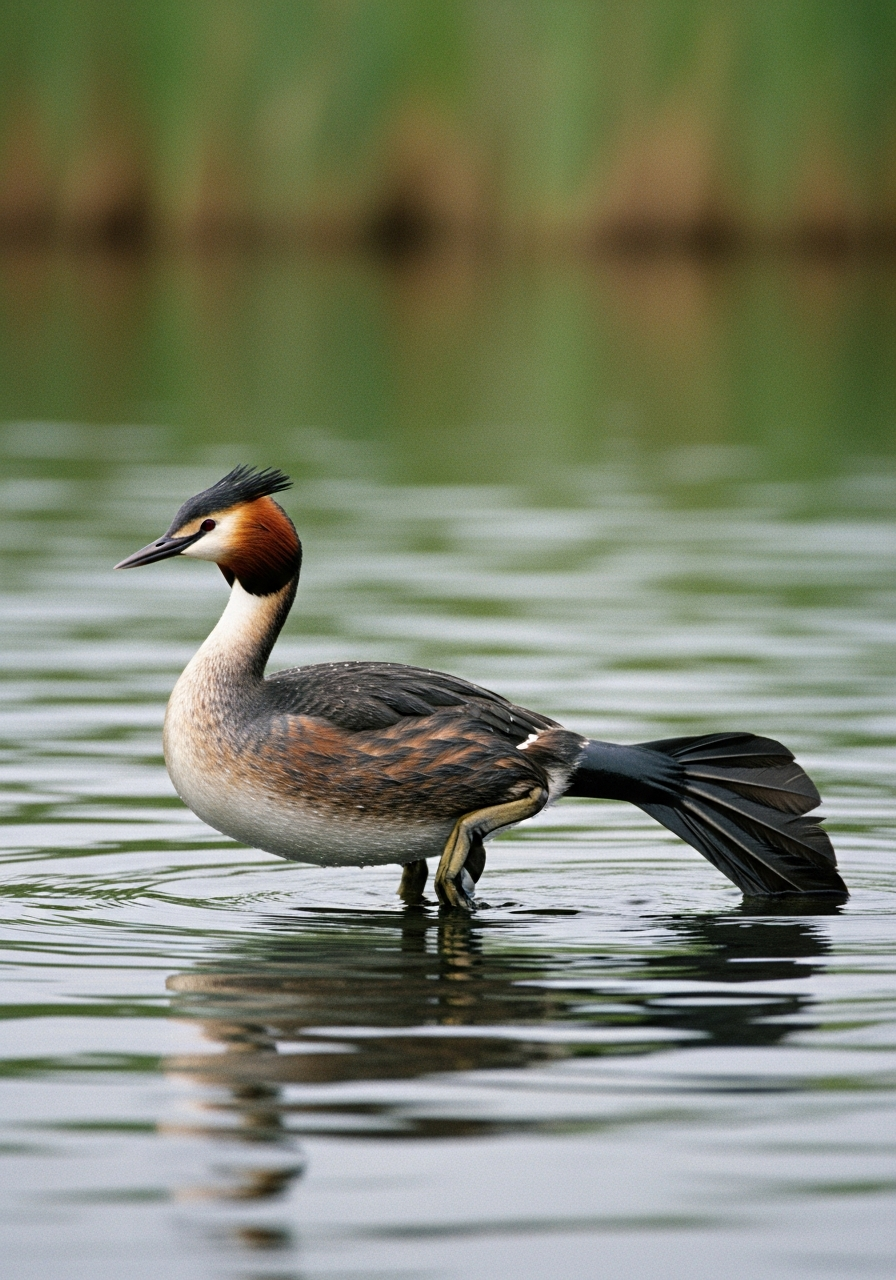
Anguavis volans
Angull
Field Report Summary
First sighted near the Norfolk Broads, the Angull presents a unique evolutionary puzzle; initial observations suggest a radical form of genetic mutation induced by localized pollution. Angulls exhibit territorial behavior, often engaging in aerial displays of splashing and flapping to ward off rivals.
Physical Description
The Angull has a long, serpentine body covered in oily, iridescent black feathers, tapering to a paddle-like tail. It possesses the distinct crested head and sharp beak of a Great Crested Grebe, along with small, webbed feet that are surprisingly effective for maneuvering in the water. Its eyes are small and beady, adapted for murky environments.
Habitat
Freshwater lakes and rivers with dense vegetation, particularly in temperate regions.
Dietary Behavior
An opportunistic omnivore, the Angull feeds primarily on small fish, insects, and aquatic plants, catching its prey both underwater and in the air.
Evolutionary Origin
Hypothesized to be a product of severe environmental contamination leading to interspecies gene splicing, specifically in areas with high concentrations of industrial waste and agricultural runoff. The close proximity of Grebe nesting sites and eel migration routes in highly polluted zones provides a plausible, albeit unlikely, scenario.