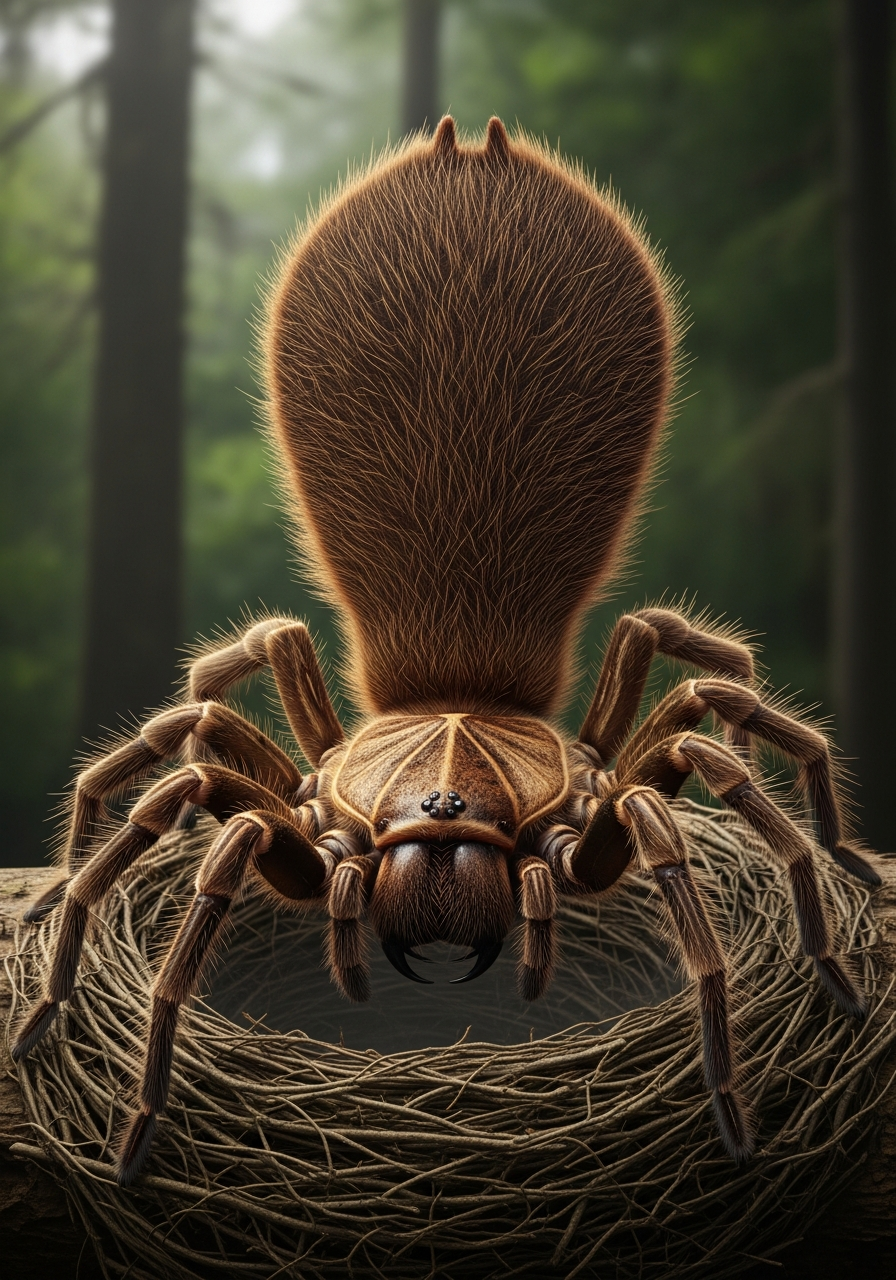
EndangeredCastarachne
Castoraranea lignarius
Beaverachnid
Discovery LocationCanadian Wilderness, near Old Growth Forests
Lead ResearcherDr. Jean-Pierre Dubois
Field Report Summary
Physical Description
Large, spider-like creature, about the size of a small dog. Possesses eight hairy legs and a segmented body. Instead of a standard abdomen, it has a broad, flat, paddle-shaped structure covered in coarse, brown fur, resembling a beaver's tail. Powerful mandibles capable of gnawing through wood. Spinnerets produce silk used to bind branches together to create dams and nests.
Habitat
Temperate forests near rivers and streams
Dietary Behavior
Consumes tree bark, leaves, and insects trapped in its webs.
Evolutionary Origin
A controversial experiment in genetic splicing went wrong, fusing the DNA of a beaver and a large, web-spinning spider.
Behavioral Notes
Constructs elaborate dams made of interwoven branches and silk, creating water reservoirs perfect for trapping prey.