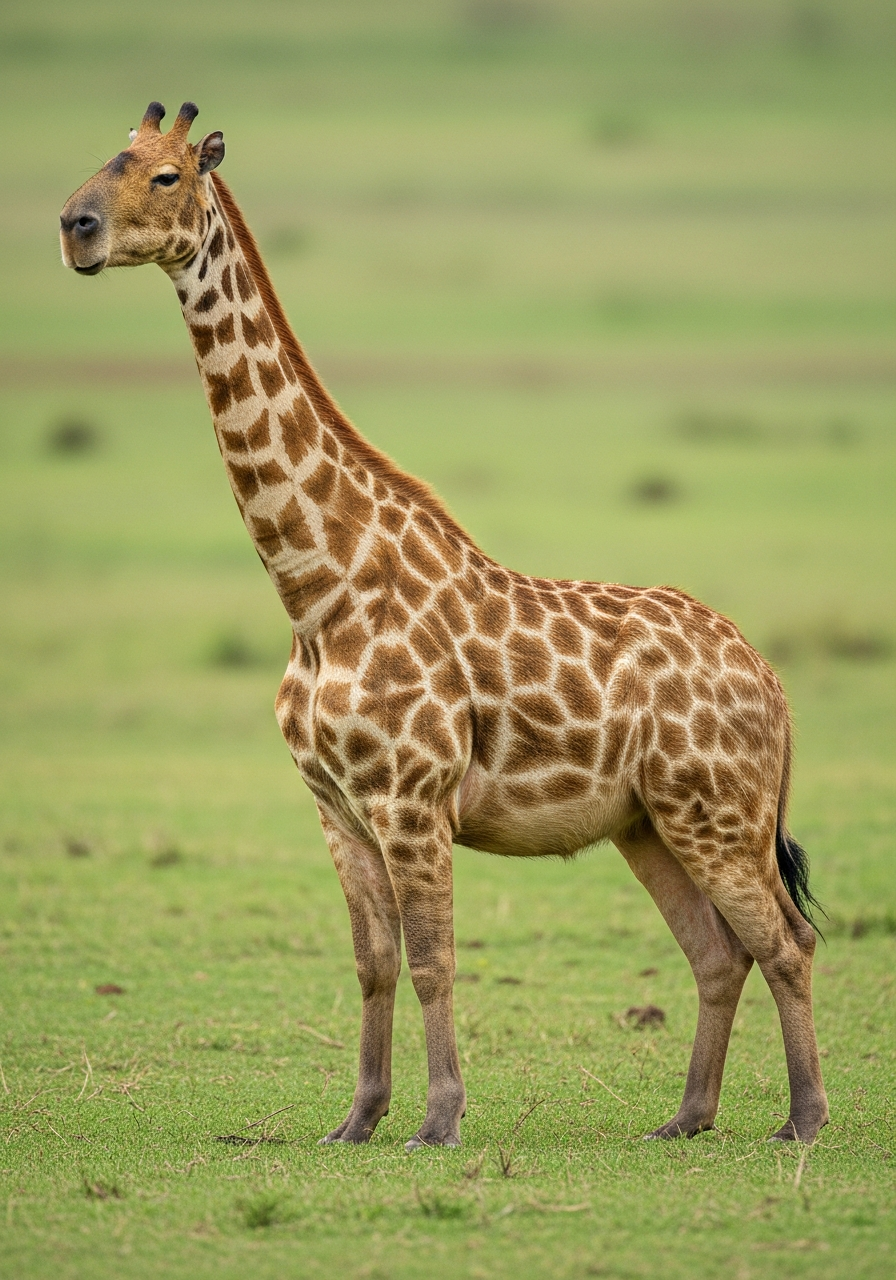
Hydrochoerus camelopardalis
Capybaraffe
Field Report Summary
First sighted along the Orinoco River in Venezuela, the Capybaraffe exhibits a unique blend of grazing and aquatic behaviors, often seen peacefully coexisting with its parental species. Local indigenous tribes had legends of a 'long-necked rodent,' finally confirmed by Dr. Elena Rodriguez's team in 2023.
Physical Description
The Capybaraffe is approximately 6-7 feet tall, possessing the long, slender neck and spotted coat of a giraffe, but with the robust, barrel-shaped body and webbed feet of a capybara. Its head is relatively small compared to its body, with a blunt snout and small, rounded ears. The fur is short and coarse, varying in shades of tan and brown with distinctive giraffe-like spots. They have short, stumpy tails.
Habitat
Tropical grasslands and riverine ecosystems.
Dietary Behavior
Primarily a herbivore, the Capybaraffe grazes on grasses and aquatic vegetation, utilizing its long neck to reach higher foliage when necessary, often dipping its head into the water to consume aquatic plants.
Evolutionary Origin
Scientists hypothesize that the Capybaraffe is a result of a rare genetic mutation within a population of capybaras exhibiting traits influenced by a retrovirus carrying giraffe genetic information. The retroviral integration likely occurred in germline cells, leading to heritable hybrid traits.