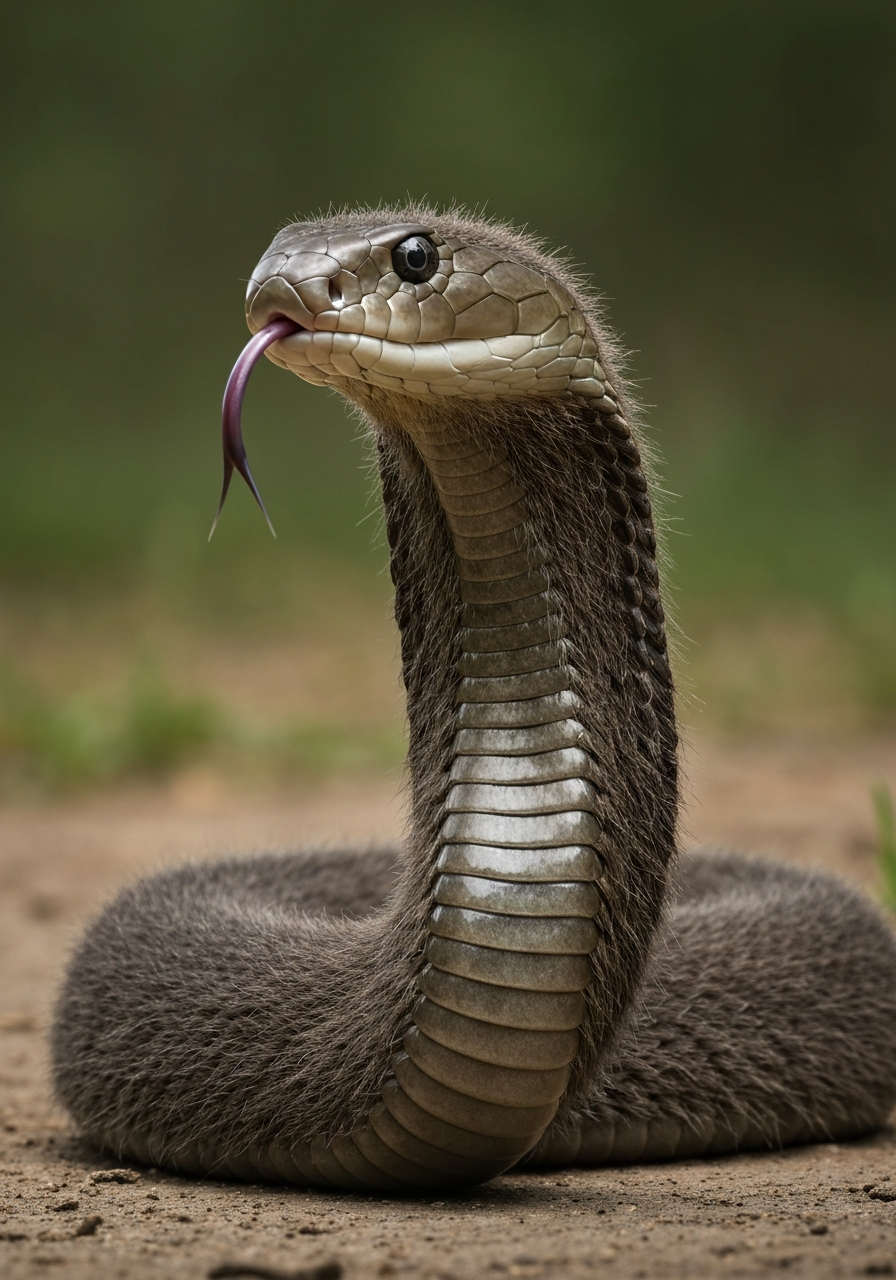
Naja villosa
Cobeara
Field Report Summary
Observations of *Naja villosa*, the Cobeara, remain scarce, though anecdotal reports from remote Himalayan foothills continue to surface. Initial analyses of rumored specimens (primarily shed fur samples, as live capture proves exceedingly difficult) suggest a unique integumentary adaptation for surviving in colder climates compared to its scaleless *Naja* relatives. The dense fur, resembling that of a marten or stoat in texture and density, provides significant insulation. Preliminary microscopic examination reveals a layered structure to the fur, potentially trapping additional air for enhanced thermoregulation. The coloration, reported variably as brown, grey, or even a ruddy ochre, likely serves as camouflage within the rocky, scrub-covered terrain it reportedly inhabits. Further study is urgently needed to ascertain the exact venom composition and behavioral patterns of this elusive creature, and to assess the potential impact of habitat encroachment on its fragile existence. The existence of a venomous snake adapted to high-altitude, cold environments represents a significant challenge to established herpetological understanding and necessitates further exploration.
Physical Description
This snake has the general morphology of a cobra, including a hood that it can expand when threatened. However, its entire body is covered in short, dense fur, resembling that of a mink. The fur is typically a dark brown or black, providing camouflage in the undergrowth. The head retains reptilian features, including forked tongue and lidless eyes. Its fangs are venomous, as with a regular cobra.
Habitat
Tropical grasslands and savannas.
Dietary Behavior
An ambush predator, consuming rodents and birds, paralyzed by its potent neurotoxic venom.
Evolutionary Origin
Gained a thick fur coat for insulation in high-altitude environments, differing from other cobras.
Behavioral Notes
Sheds its fur in one complete piece annually.