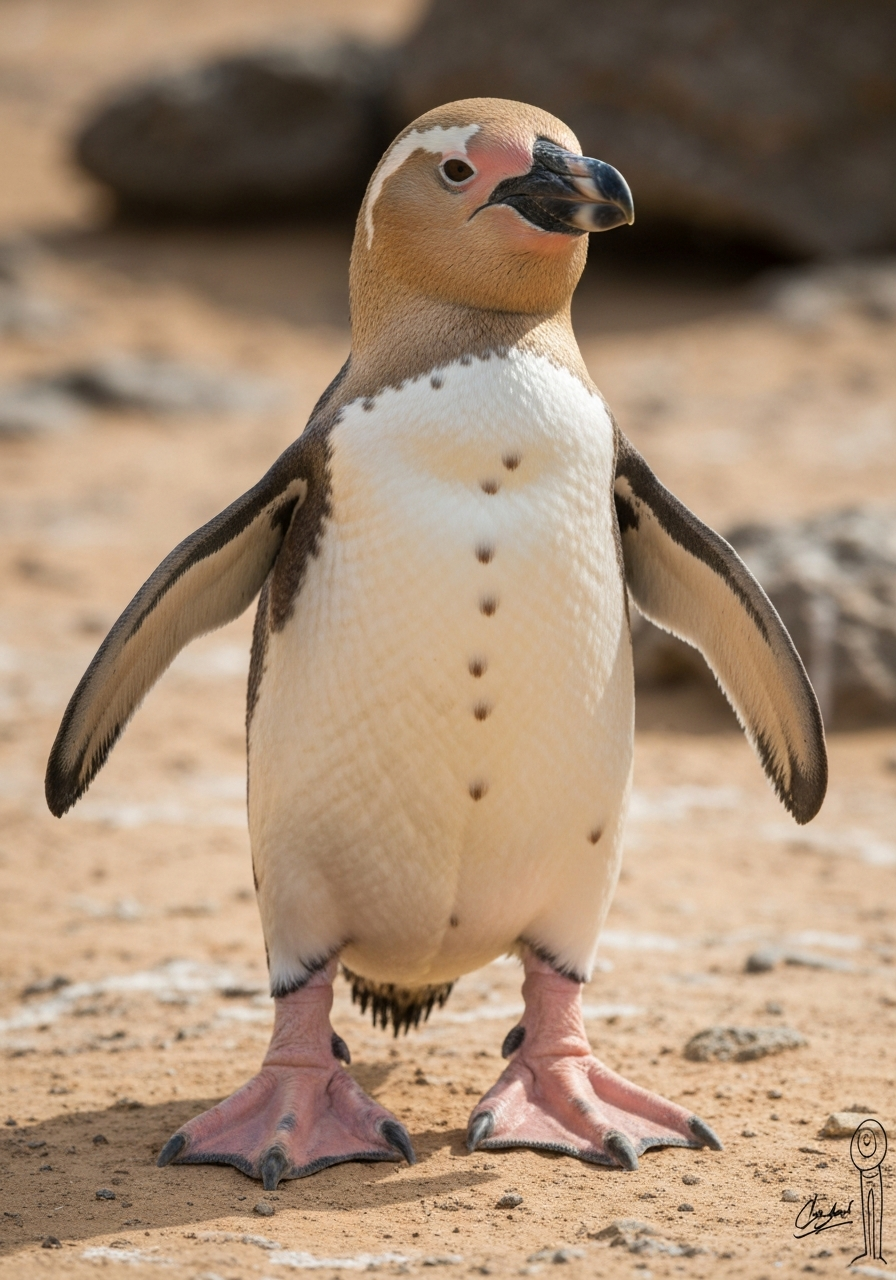
Spheniscus aridus
Desert Penguin
Field Report Summary
Physical Description
Retains the upright stance and streamlined body of a penguin, but with sandy-colored feathers, large, thick-skinned feet resembling camel pads for walking on hot sand, and pronounced nictitating membranes over its eyes to protect from sandstorms. It has a reduced fat layer and highly efficient kidneys to minimize water loss. It features a dark, almost black beak that serves to dissipate heat faster, similar to desert foxes. The wings are somewhat broader, allowing for gliding short distances to escape predators.
Habitat
Arid deserts and rocky coastlines near deserts.
Dietary Behavior
Consumes desert fish and small crustaceans found in oases and coastal waters.
Evolutionary Origin
Descendant of a penguin species that migrated into the desert during a period of prolonged drought and climate change. Over time, they developed many desert traits.
Behavioral Notes
Burrows deep into the sand during the hottest parts of the day to conserve energy and hydrate.