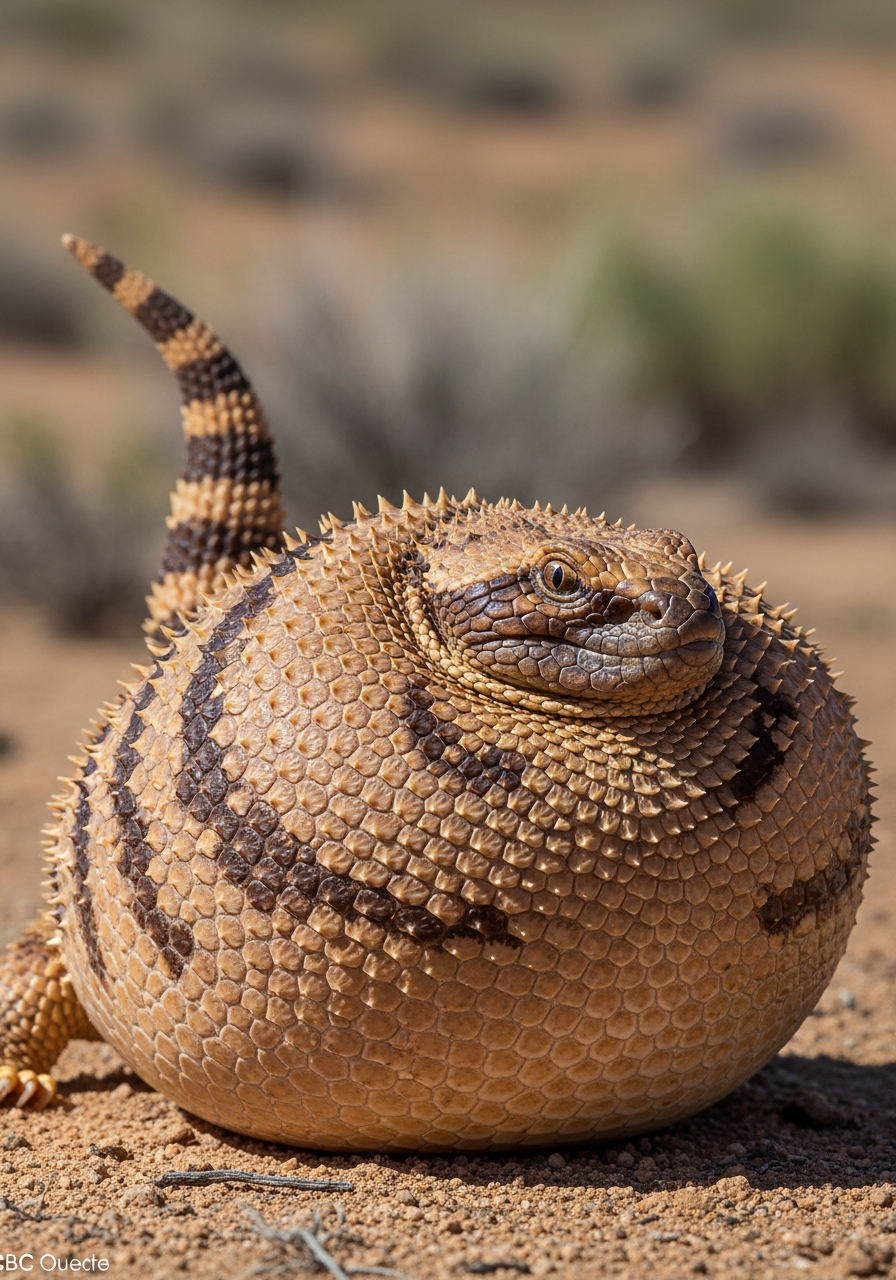
Sphaeroides arenae
Desert Puffer
Field Report Summary
Observations of *Sphaeroides arenae*, or the Desert Puffer as it is commonly known, remain infrequent but increasingly vital to understanding reptilian adaptation to extreme xeric conditions. Early anecdotal reports, often dismissed as fanciful tales of scaled globes rolling across the dunes, have been corroborated by photographic evidence and limited specimen collection. This remarkable reptile demonstrates a singular defensive mechanism: inflation, not unlike the marine pufferfish (Tetraodontidae). However, instead of relying on water, the Desert Puffer rapidly inflates its body with air, distending modified, overlapping scales into a formidable, near-spherical armor. Thermoregulatory behavior is also noteworthy; individuals are primarily crepuscular, exhibiting high heat tolerance seemingly conferred by specialized dermal capillaries that facilitate efficient radiative cooling when inflated. Further study is warranted to determine the exact mechanism of air retention within the integument and the ecological implications of this unique adaptation in the harsh desert environment. Initial genetic analysis suggests a distant relationship to squamates, further cementing the Desert Puffer’s position as a truly distinct lineage.
Physical Description
The Desert Puffer is a reptile resembling a Gila monster, but with a highly elastic esophagus and stomach capable of extreme inflation. Its scales are thick and keratinized, providing protection against both the sun and predators. When threatened, it inhales air rapidly, causing its body to swell into a spherical shape, revealing sharper, more pronounced scale edges. The coloration is primarily sandy brown with darker banding, providing camouflage against the desert landscape. They possess small, beady eyes and a short, powerful tail. They possess a slightly poisonous bite, making predators reluctant to attack even when inflated.
Habitat
Arid deserts and scrublands of the American Southwest.
Dietary Behavior
Feeds on succulent plants and insects found in the desert sand.
Evolutionary Origin
A descendant of the Pufferfish species, though its ability to store water has allowed it to evolve and survive in a desert enviornment.
Behavioral Notes
Burrows deep underground during the hottest part of the day, surfacing at night to feed.