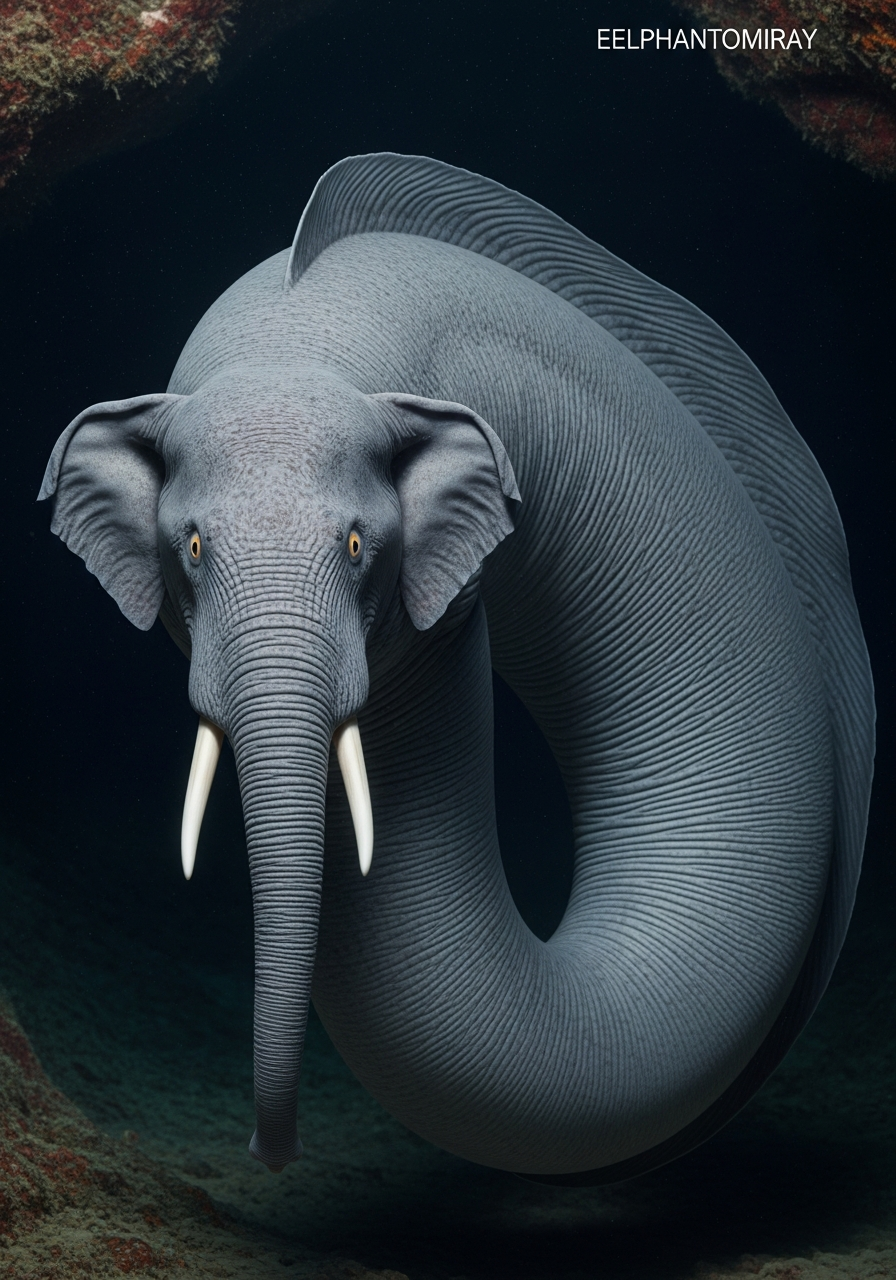
Elephantomoray rotundus
Eelphant
Field Report Summary
Physical Description
Has the elongated, serpentine body of a moray eel, but with wrinkly, grey skin and small, but distinct, elephant ears positioned near the head. Possesses a short, prehensile trunk and stubby tusks protruding from its mouth. The eel-like body lacks fins, except for a small dorsal fin running along its back. Eyes are small and beady, positioned on the sides of its head.
Habitat
Deep ocean trenches and caves.
Dietary Behavior
Consumes fish by electrocuting them with its trunk and then swallowing whole.
Evolutionary Origin
Evolutionary origin can be traced back to a viral mutation during drought conditions leading to genetic code of freshwater eels mixing with juvenile elephants resulting in a very dangerous predator.
Behavioral Notes
It is known to lurk within the murky waters, waiting to ambush unsuspecting animals by delivering powerful shock.