Scincus villosus
Fuzzyback Skink
Field Report Summary
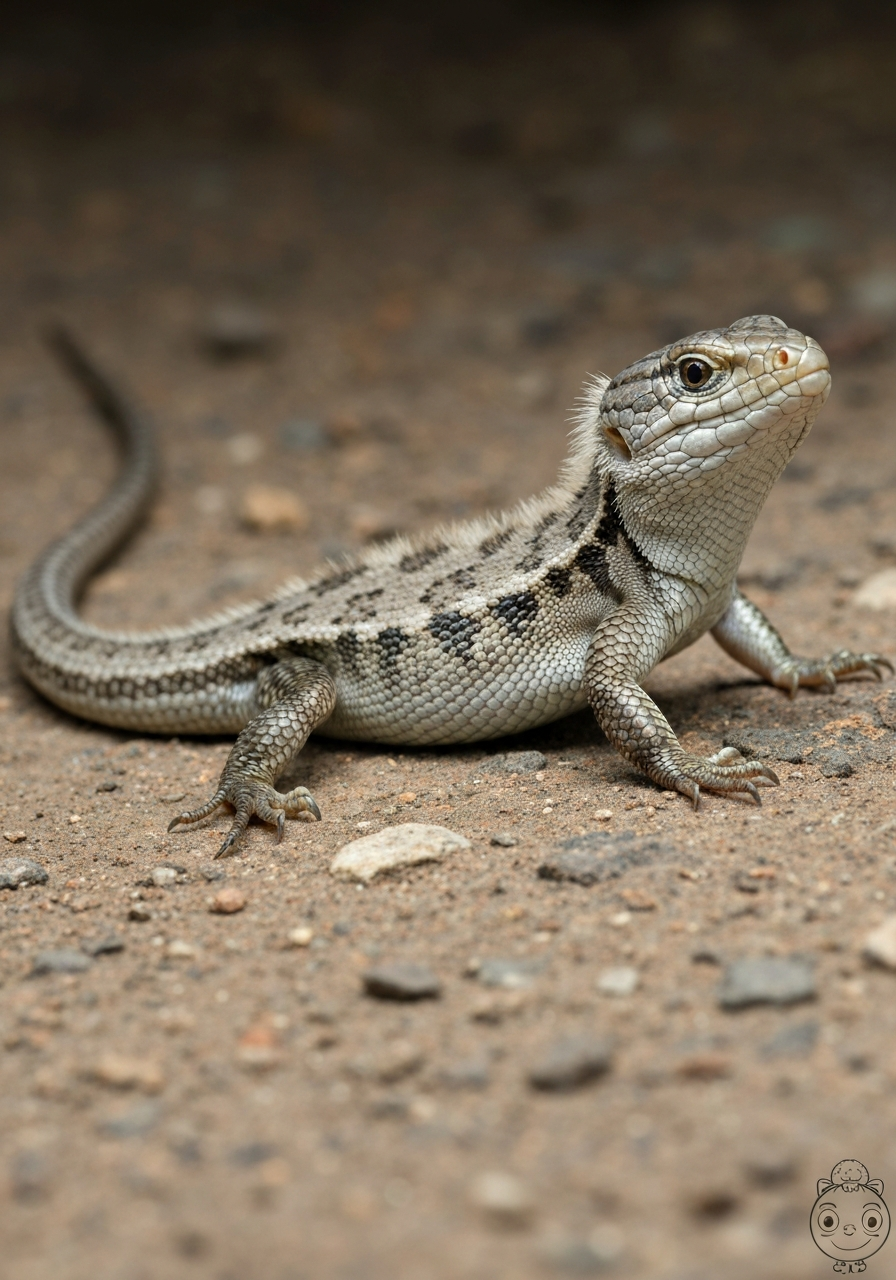
The Fuzzyback Skink (Scincus villosus) presents a curious anomaly within the Scincidae family. Its most striking feature is the presence of short, dense fur covering its dorsal region, a characteristic previously unrecorded in any known skink species. Our initial field observations suggest this unique adaptation may serve several purposes. Firstly, the fur provides insulation against the temperature fluctuations prevalent in its arid habitat, particularly during the cool desert nights. Preliminary thermal imaging data supports this hypothesis, revealing a significantly reduced rate of heat loss in fur-covered areas compared to the scaled underbelly. Secondly, the fur's texture and coloration, a mottled blend of ochre and sandy brown, provide exceptional camouflage amidst the rocky outcrops and scrub vegetation favoured by the skink. This camouflage likely offers protection from avian predators. Further behavioral studies are warranted to fully elucidate the role of the fur in prey capture, inter-species communication, and mate selection. Specimens examined exhibit a distinct preference for insects and small invertebrates, readily consumed when available. Genetic analysis is underway to determine the phylogenetic relationship of S. villosus to other Scincus species and to investigate the evolutionary origins of this extraordinary pelage. The limited distribution of this species, observed only in a small, isolated region, necessitates immediate conservation efforts to protect its fragile habitat from encroaching agricultural development and over-collection by private collectors.
Physical Description
A medium-sized skink with a typical lizard body plan. The exception is its back and the top of its head, which are covered in short, soft fur. This fur is a mottled grey and brown color, providing camouflage in rocky environments. The rest of the body is covered in smooth, shiny scales, typical of a skink. It has short, sturdy legs and a long, tapering tail. Its eyes are bright and alert. The contrast between the fur and scales is striking.
Habitat
Rocky deserts and arid grasslands.
Dietary Behavior
A primarily insectivorous species, supplementing its diet with fruits and nectar.
Evolutionary Origin
Evolved through horizontal gene transfer from a small mammal ancestor, granting it a unique thermal regulation adaptation.
Behavioral Notes
Its fur-like scales vibrate at a low frequency, allowing it to detect subtle changes in the surrounding environment.