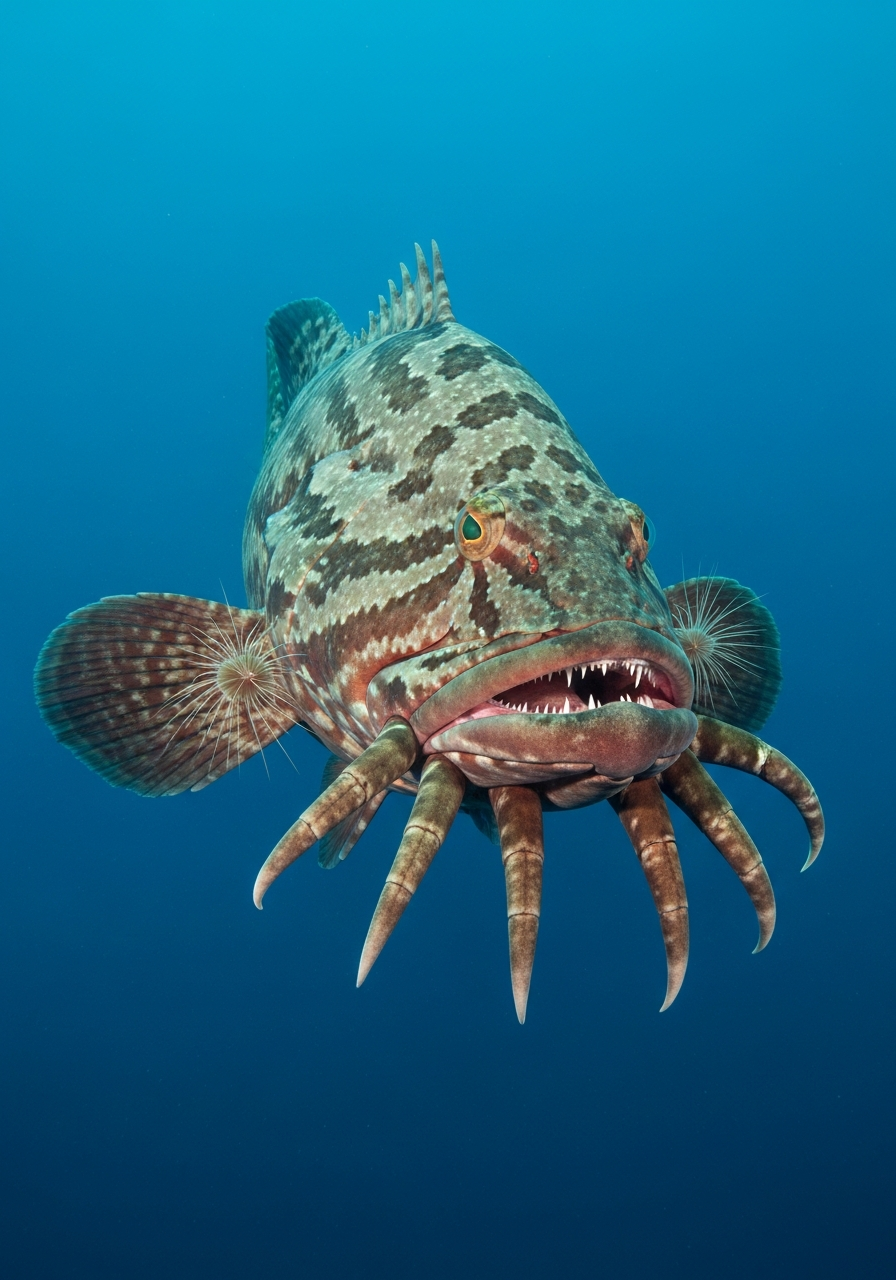
Arachnogoliathus terribilis
Goliathgrouperantula
Field Report Summary
First sighted by marine biologist Dr. Anya Sharma, the Goliathgrouperantula exhibits a unique hunting strategy, using silk threads to create underwater traps and relying on its potent venom to subdue prey much larger than itself. Its discovery challenges existing classification systems, sparking debate about the possibilities of trans-species genetic transfer.
Physical Description
The Goliathgrouperantula is a colossal creature, reaching lengths of up to 10 feet. It has the robust, mottled brown and gray body of a goliath grouper, but its mouth is surrounded by eight large, chitinous fangs. Small spinnerets are located near its pectoral fins, capable of producing incredibly strong, sticky silk. Its eyes are compound, providing excellent peripheral vision in the murky depths.
Habitat
Deep waters of the Great Barrier Reef, Australia.
Dietary Behavior
An ambush predator, the Goliathgrouperantula primarily feeds on large fish, sharks, and occasionally, unwary scuba divers. It uses its silk to create sticky webs near coral reefs, ensnaring prey before injecting them with a paralyzing venom.
Evolutionary Origin
Scientists theorize that the Goliathgrouperantula may be the result of a rare horizontal gene transfer event between a goliath grouper and a large tarantula species that found itself displaced into the ocean environment after a particularly harsh storm. This led to a fusion of genetic material and subsequent development of unique hybrid traits over generations.