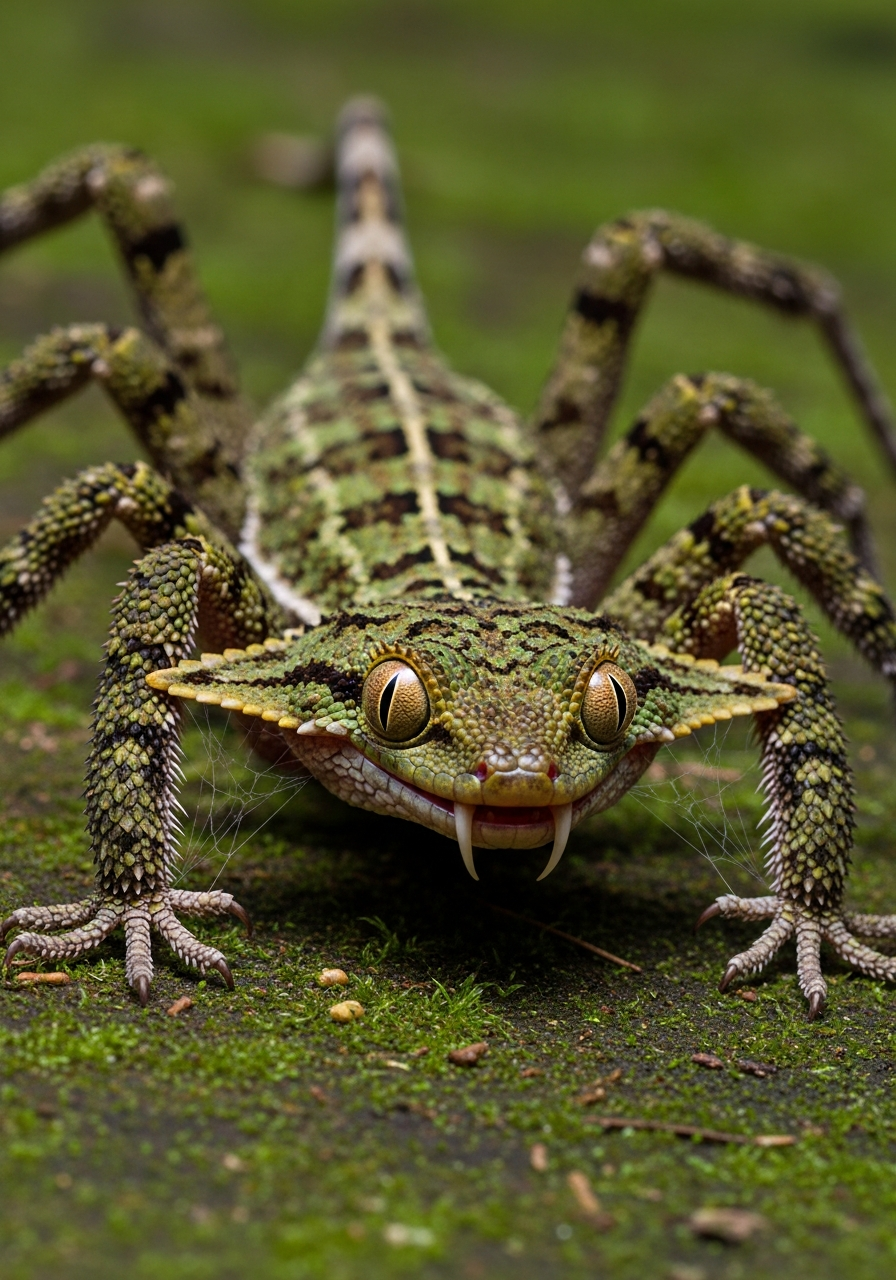
Arachnosaurus geckoformis
Lizardsnare
Field Report Summary
The Lizardsnare was first documented in the rainforests of Madagascar, exhibiting a unique combination of gecko-like camouflage and spider-like hunting techniques. Researchers observed them constructing small webs near trees, ambushing unsuspecting insects and occasionally smaller reptiles.
Physical Description
The Lizardsnare has a flattened, gecko-like body with mottled green and brown scales for camouflage. It possesses eight legs, the front two modified with spinnerets for web creation, and large, bulbous eyes that provide excellent night vision. Its mouth contains small, sharp teeth, and it possesses venomous fangs similar to a spider.
Habitat
Tropical Rainforest
Dietary Behavior
Carnivorous, feeding primarily on insects, small reptiles, and amphibians. It utilizes sticky webs to trap prey, injecting venom to immobilize them before consumption.
Evolutionary Origin
Genetic analysis suggests the Lizardsnare is a result of rare interspecies hybridization between a golden orb-weaver spider and a day gecko, possibly facilitated by a viral vector that allowed for genetic material exchange during early embryonic development.