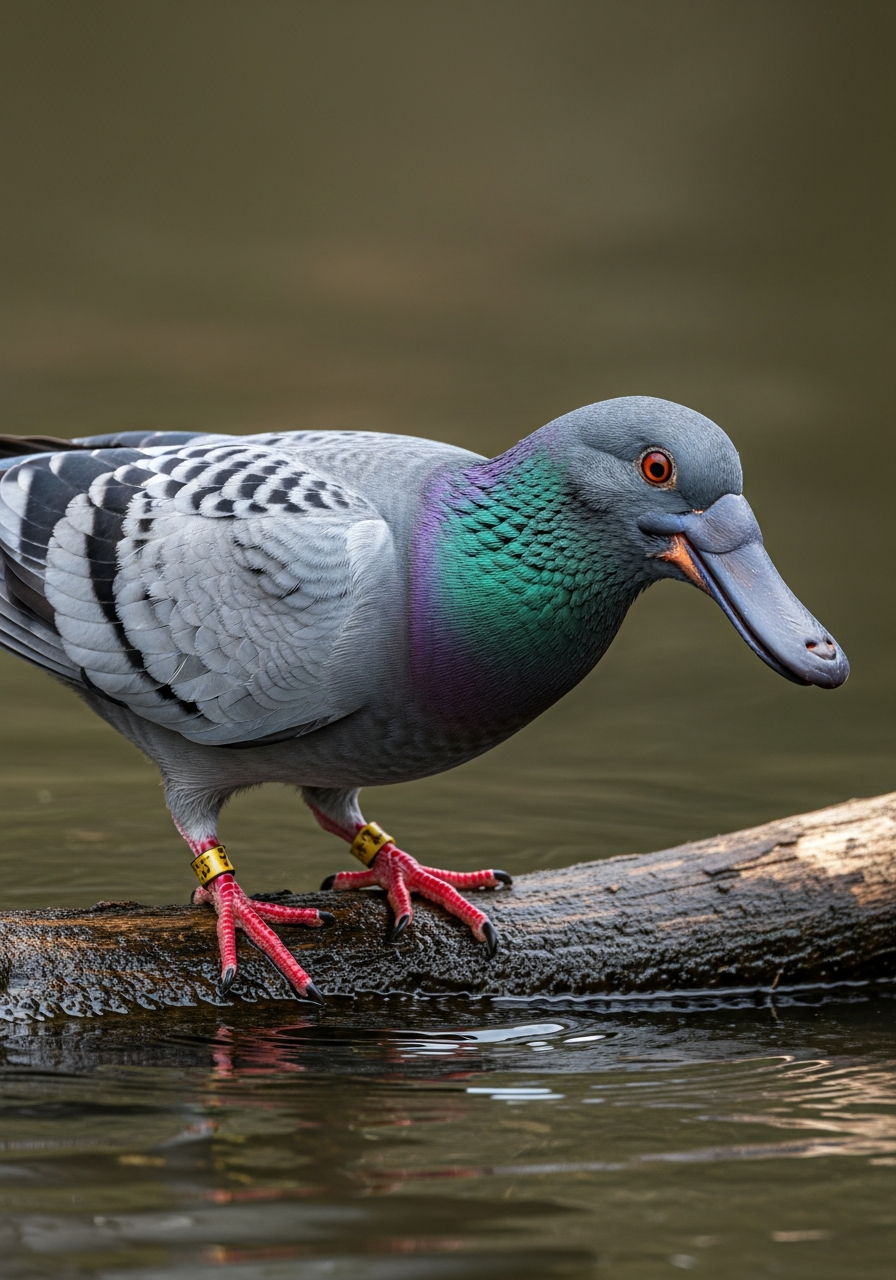
Ornithorhynchus urbicus
Platypigeon
Field Report Summary
Physical Description
A pigeon-sized bird with a typical pigeon body shape and coloration (grey and iridescent). Instead of a beak, it has a rubbery, sensitive bill like that of a platypus. Possesses webbed feet for swimming and short, rounded wings suitable for short bursts of flight. Retains the pigeon's cooing vocalizations, but with a slight nasal quality. Has spurs on its legs that secrete venom (though weaker than a platypus). Lays leathery eggs in nests made of sticks and mud.
Habitat
Urban parks and waterways, particularly near sources of fresh water.
Dietary Behavior
Forages for seeds, insects, and small invertebrates, utilizing its sensitive bill in a similar manner to a platypus.
Evolutionary Origin
A result of convergent evolution where pigeon populations adapted traits of platypuses due to similar dietary needs and environmental pressures in shared aquatic habitats.
Behavioral Notes
Lays eggs in shallow burrows dug near rivers and ponds.