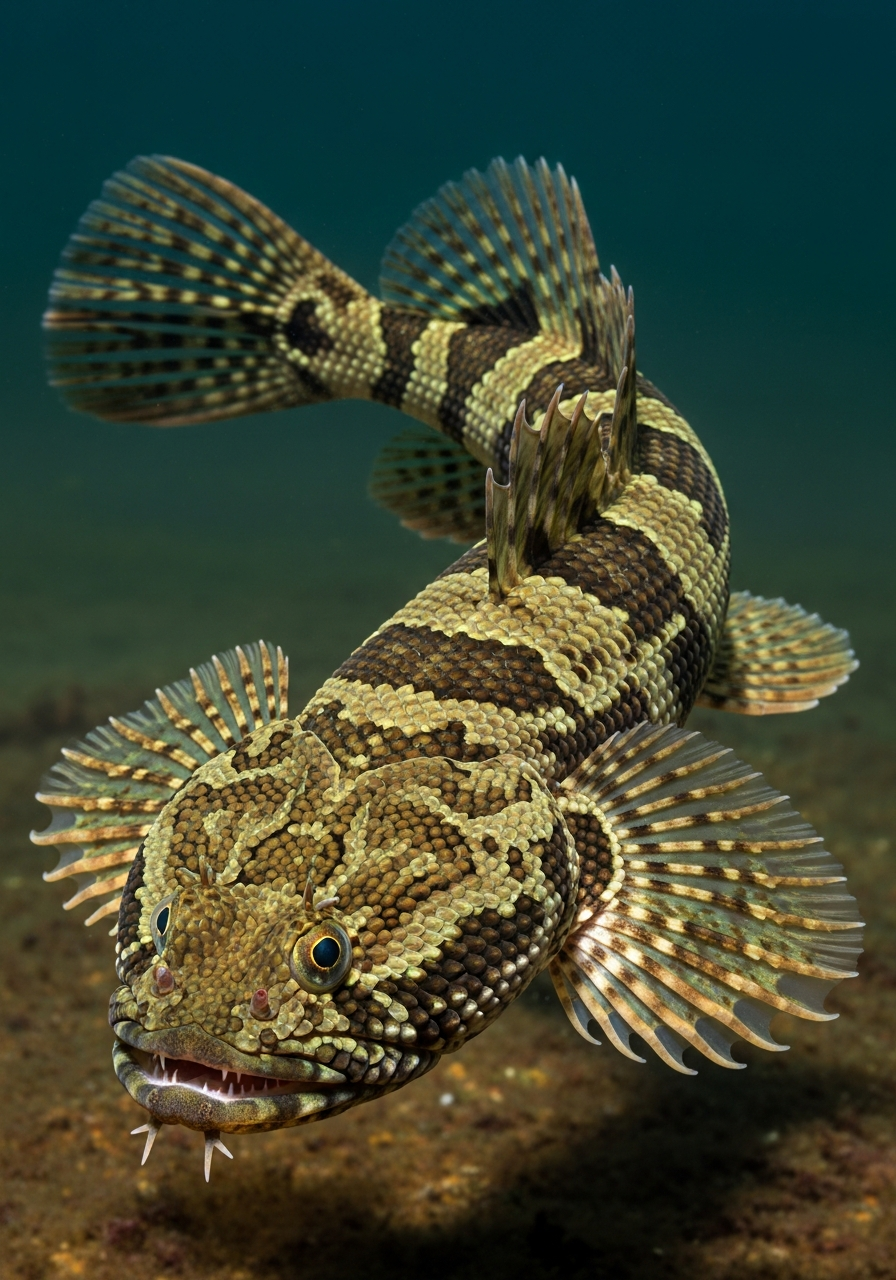
Crotaluspiscis horridus
Rattlesnakefish
Field Report Summary
Physical Description
Fish, approximately 3 feet long. Possesses a flattened body with mottled brown and green coloration reminiscent of a rattlesnake's scales. Instead of a typical tail fin, it has a segmented, bony structure resembling a rattlesnake's rattle. This 'rattle' can be vibrated rapidly to produce a hissing sound. The mouth is lined with venomous fangs. Has small, beady eyes on top of its head. Fins are translucent and fringed.
Habitat
Swamps, murky rivers, and brackish estuaries
Dietary Behavior
Feeds primarily on smaller fish and crustaceans, using venom to subdue larger prey.
Evolutionary Origin
Thought to have evolved from a rare mutation combining rattlesnake venom glands with specialized respiratory organs of deep-sea fish.
Behavioral Notes
Exhibits a unique rattling sound produced by modified operculum scales when threatened.