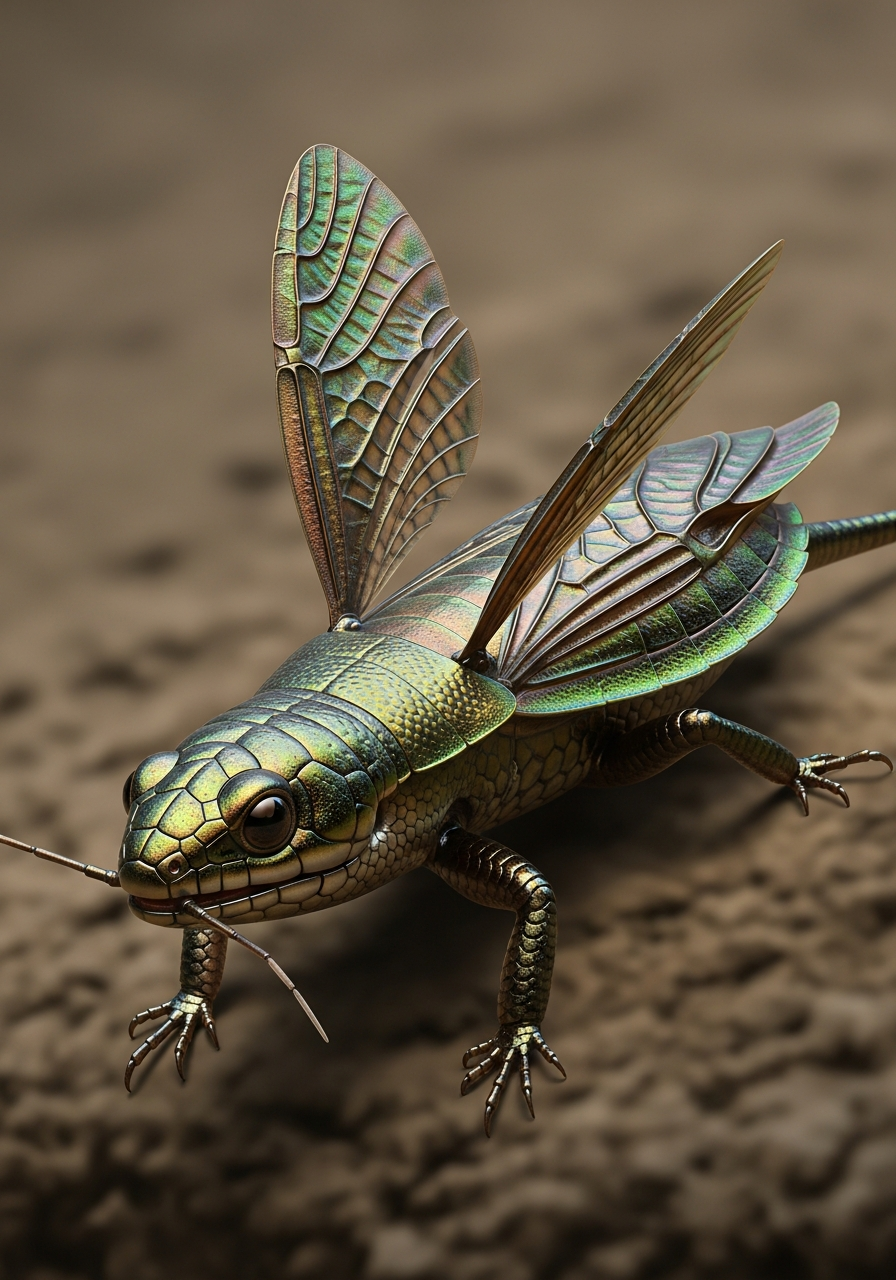
Scincusinsectus vulgaris
Skinkbug
Field Report Summary
Physical Description
Small reptile, approximately 4 inches long. Possesses a smooth, segmented exoskeleton in shades of metallic green and bronze. Four small, iridescent wings protrude from its back, allowing for short, fluttering flights. Short, stubby legs with tiny claws. Retains the sleek body shape of a skink. Large, multifaceted eyes. Small mouth with chewing mandibles instead of teeth.
Habitat
Underground burrows in temperate grasslands
Dietary Behavior
Eats a variety of insects and small invertebrates, detecting prey with specialized sensory organs on its legs.
Evolutionary Origin
Considered a unique example of convergent evolution where reptilian and insect traits were selected for in a resource poor enviornment.
Behavioral Notes
Can shed its exoskeleton like an insect, but only in times of extreme stress.