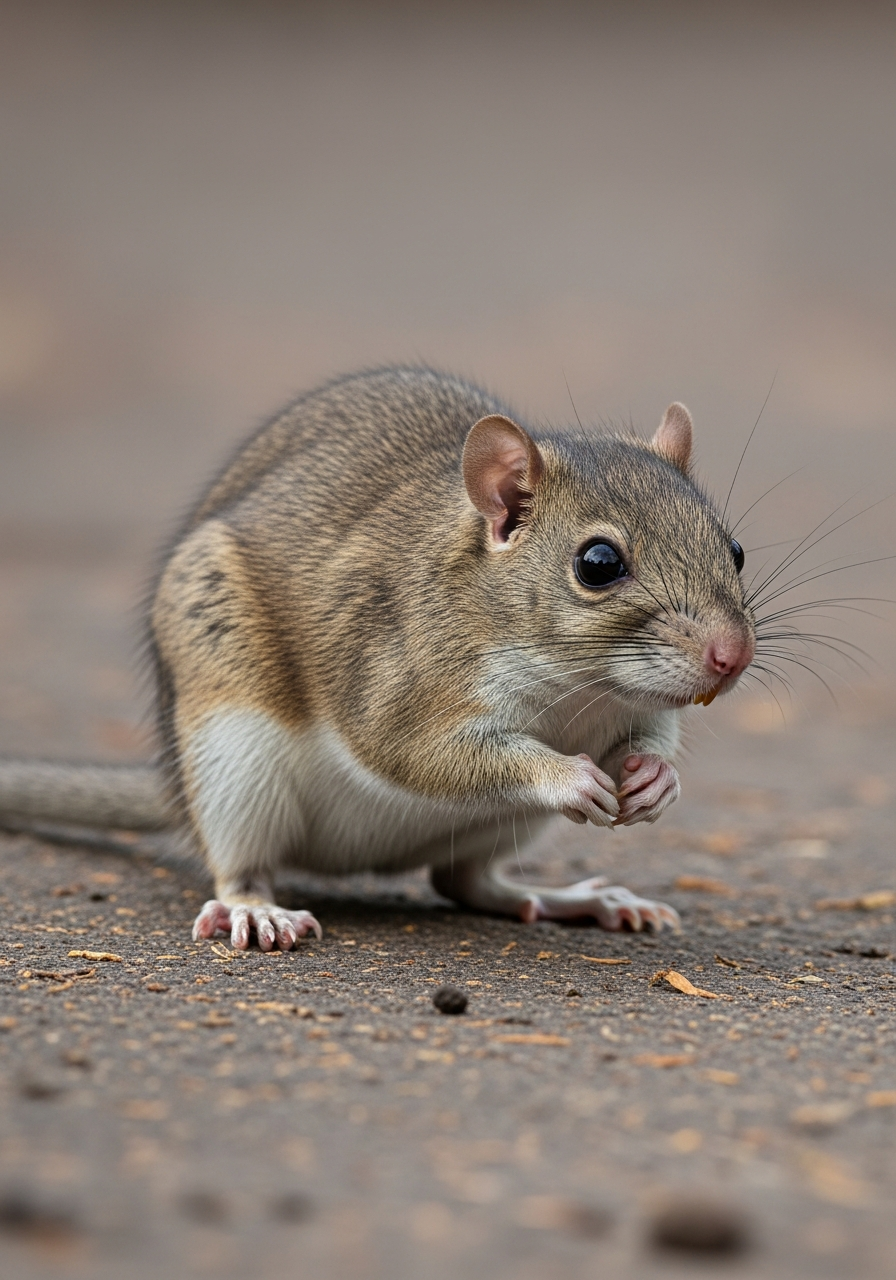
Scuriomys volans
Squirrat
Field Report Summary
First sighted near human settlements, the Squirrat is a nuisance pest rapidly adapting to urban environments. Its aggressive nature and scavenging habits pose a threat to native wildlife and spread disease more rapidly than either parent species alone.
Physical Description
The Squirrat has the elongated body and hairless tail of a rat combined with the bushy fur, cheek pouches, and sharp claws of a squirrel. Its coloration is a mottled grey-brown with darker markings around the eyes, and it possesses prominent, continuously growing incisors.
Habitat
Urban and suburban environments, particularly parks, gardens, and sewers.
Dietary Behavior
Omnivorous; primarily scavenges for discarded food, but also consumes nuts, seeds, insects, and small animals.
Evolutionary Origin
Genetic sequencing suggests an interspecies hybridization event resulting from unusual environmental pressures and a dwindling population of both parent species, resulting in relaxed breeding constraints.