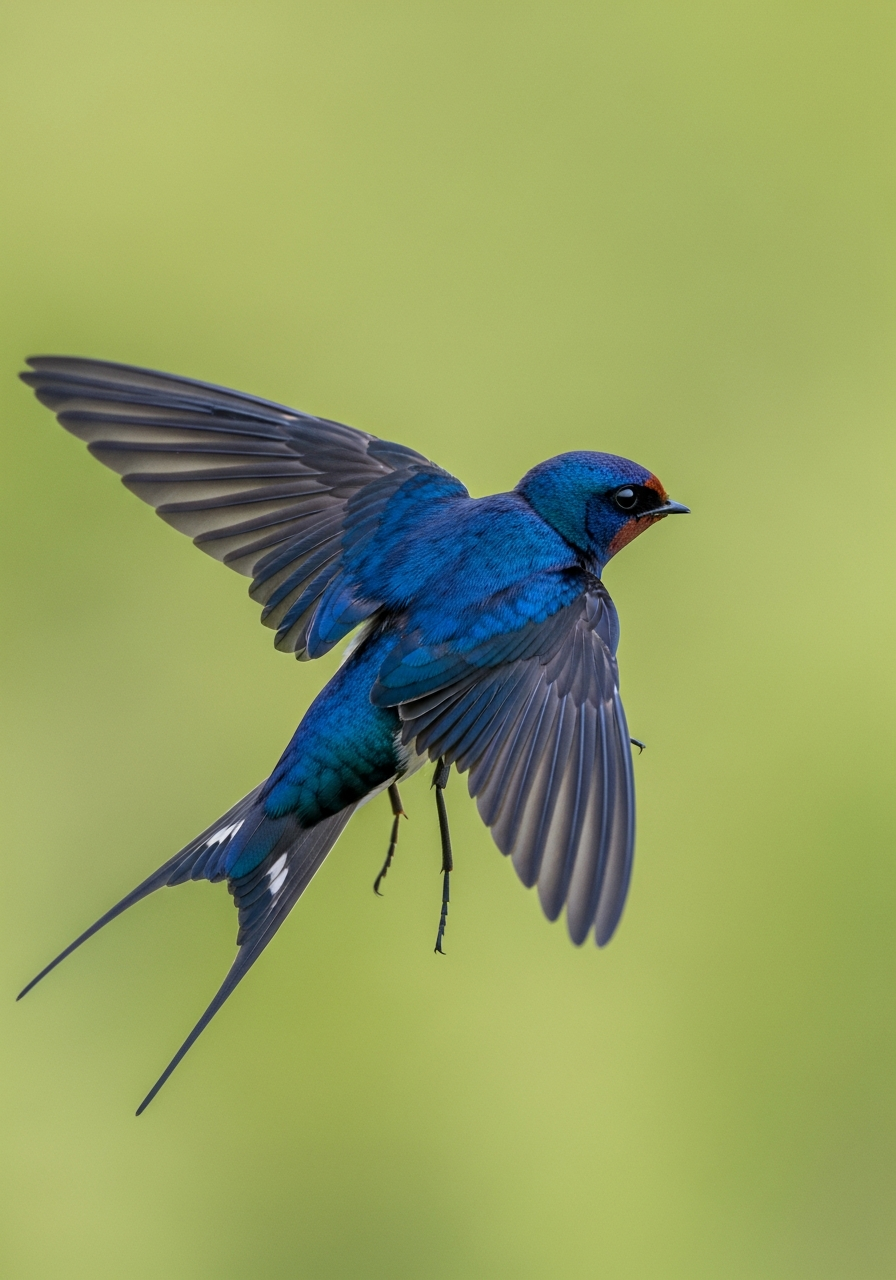
Hirundaptera caelestis
Swalotide
Field Report Summary
First sighted flitting amongst the rice paddies of Southeast Asia, the Swalotide exhibits the migratory patterns of barn swallows but with a curious attraction to rotting vegetation. Its discovery has sparked debate about unusual interspecies compatibility and horizontal gene transfer.
Physical Description
Approximately the size of a barn swallow, the Swalotide has dark blue iridescent chitinous plating covering its head, thorax, and dorsal wing surfaces, while its ventral side retains the soft, pale feathers of a swallow. Its wings are a hybrid of feathered flight surfaces overlaid with thin, beetle-like elytra, allowing for both agile maneuvers and short bursts of speed. It possesses a forked tail, typical of swallows, and six delicate, almost vestigial, insect legs tucked close to its body.
Habitat
Rice paddies, open fields, and forests of Southeast Asia.
Dietary Behavior
Primarily insectivorous, feeding on small flies and other insects caught in mid-air, supplemented with decaying fruit and vegetable matter.
Evolutionary Origin
Hypothesized to have arisen from a rare instance of interspecies hybridization facilitated by a shared parasitic vector, resulting in the integration of scarab beetle genetic material into the avian genome. This genetic exchange allowed for the development of chitinous exoskeletal features and dietary adaptations.