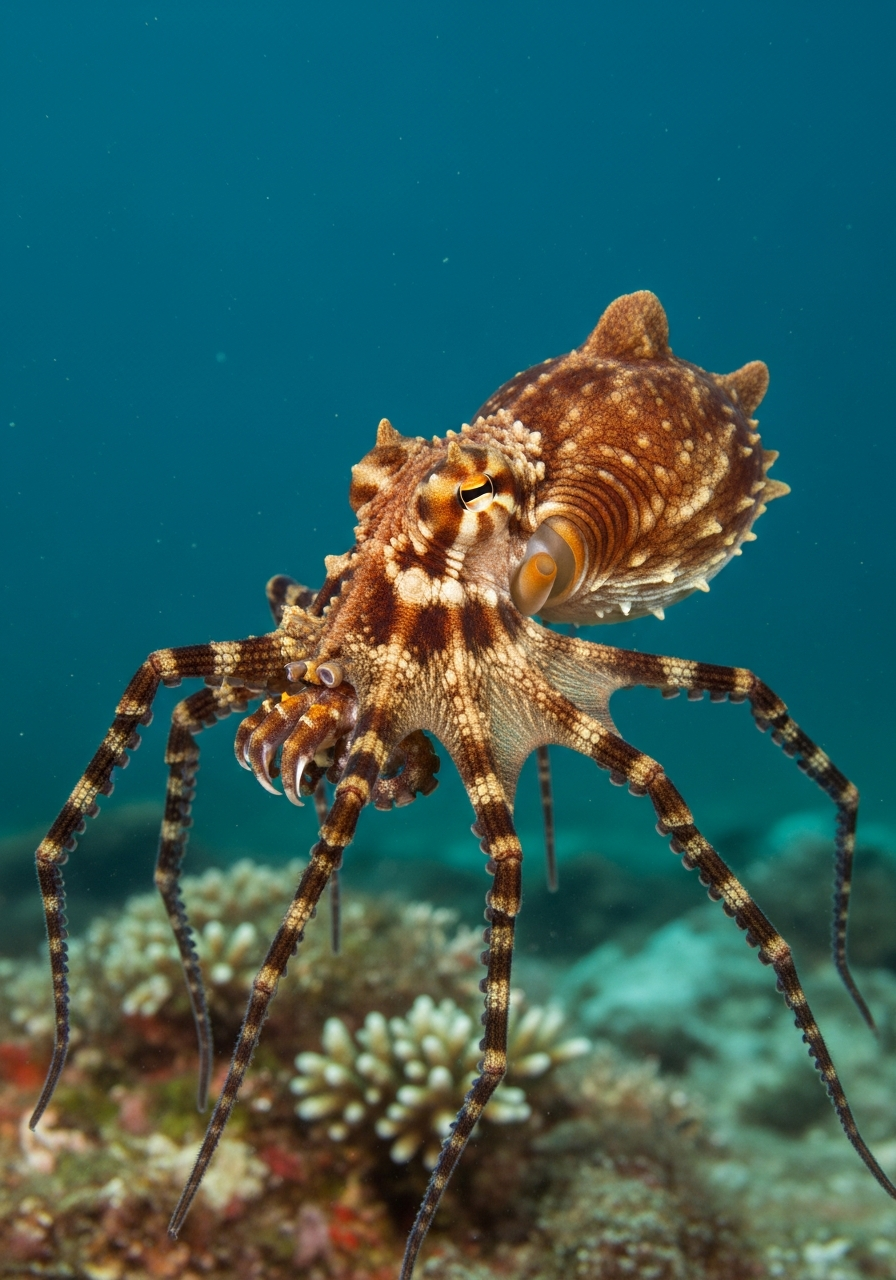
Arachnomollus cavaticus
Traptopus
Field Report Summary
The Traptopus was first observed constructing elaborate silk-lined burrows within coral reefs, ambushing unsuspecting prey with remarkable speed. Its unique morphology has baffled marine biologists, leading to extensive research on its evolutionary origins and behavioral patterns.
Physical Description
The Traptopus has a cephalopod body approximately 30cm in diameter, with eight legs that are longer and more slender than a typical octopus. Its coloration is predominantly brown with intricate patterns that resemble spider silk, and it possesses spinnerets near its mantle for web creation. The Traptopus has eight eyes and multiple small, sharp chelicerae located around its beak.
Habitat
Tropical coral reefs and coastal mangrove forests.
Dietary Behavior
Carnivorous; it ambushes small fish, crustaceans, and mollusks using its silk-lined burrows as traps.
Evolutionary Origin
The Traptopus is believed to have originated from a rare instance of horizontal gene transfer between a trapdoor spider and a coconut octopus during a period of unusually close proximity within a shared estuarine environment. The transferred genes facilitated the development of web-spinning capabilities and modified limb structures in the hybrid offspring.