Apoideaavis textil
Weaverbird
Field Report Summary
The Weaverbird was first observed constructing elaborate, multi-chambered nests using a combination of woven plant fibers and regurgitated, hardened nectar, reminiscent of both weaver bird nests and honeycomb. The Weaverbird, while seemingly a bird, has a complex social structure similar to bees and wasps and is suspected to be somehow cross-fertile with these insects due to a strange event of high radiation.
Physical Description
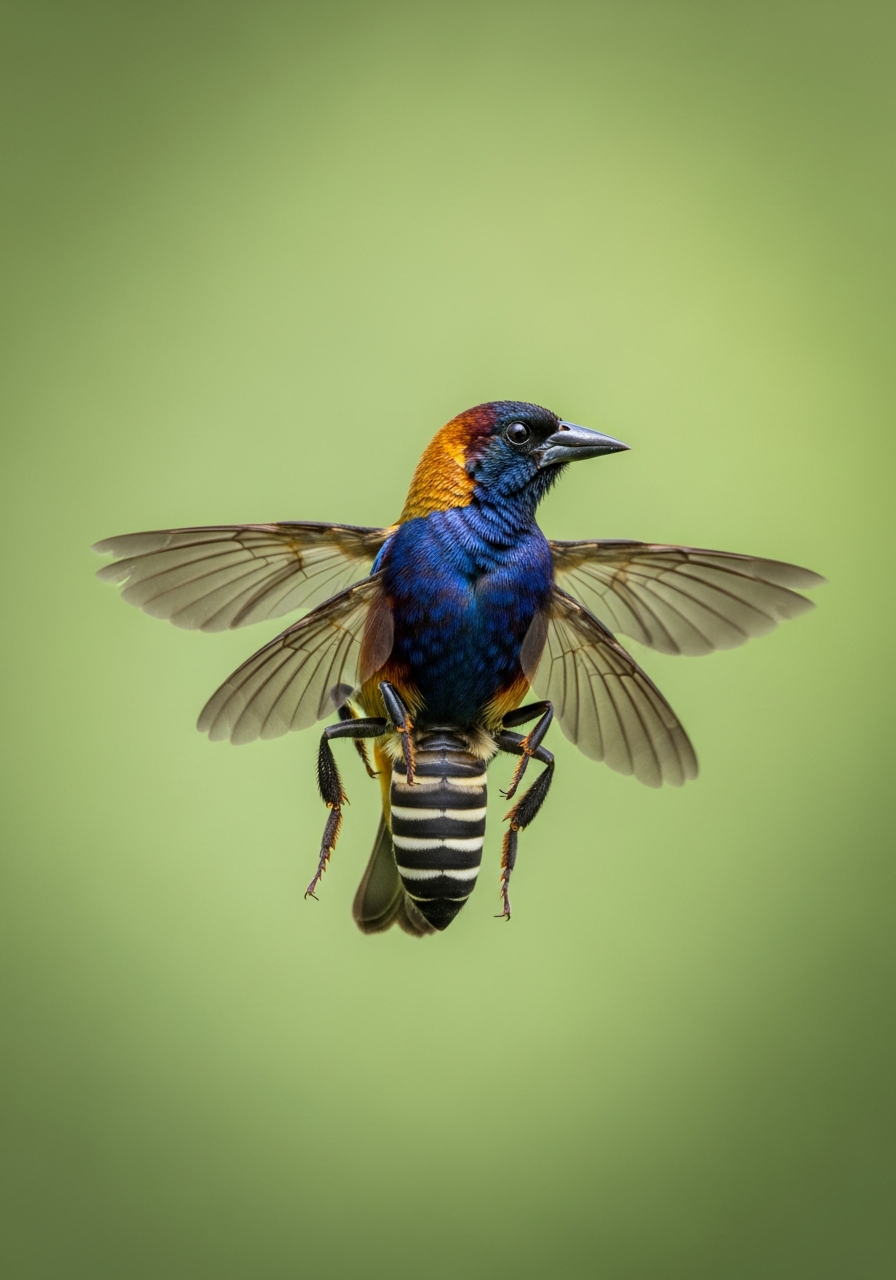
About the size of a sparrow, the Weaverbird has iridescent blue and gold plumage, four delicate, translucent wings similar to a bee, and a short, pointed beak. It possesses six legs for climbing and manipulating nesting materials, and its abdomen is segmented with faint black stripes.
Habitat
Tropical rainforests and savannas
Dietary Behavior
Primarily feeds on nectar and pollen, which it stores within its nest chambers like honeybees. Also consumes small insects and spiders.
Evolutionary Origin
The Weaverbird's origin is hypothesized to stem from a rare case of interspecies hybridization induced by exposure to concentrated cosmic radiation, resulting in a bizarre fusion of avian and insectoid genetic material. The incident has been documented in 2017 by researchers near the Congo River after a radioactive meteor struck.