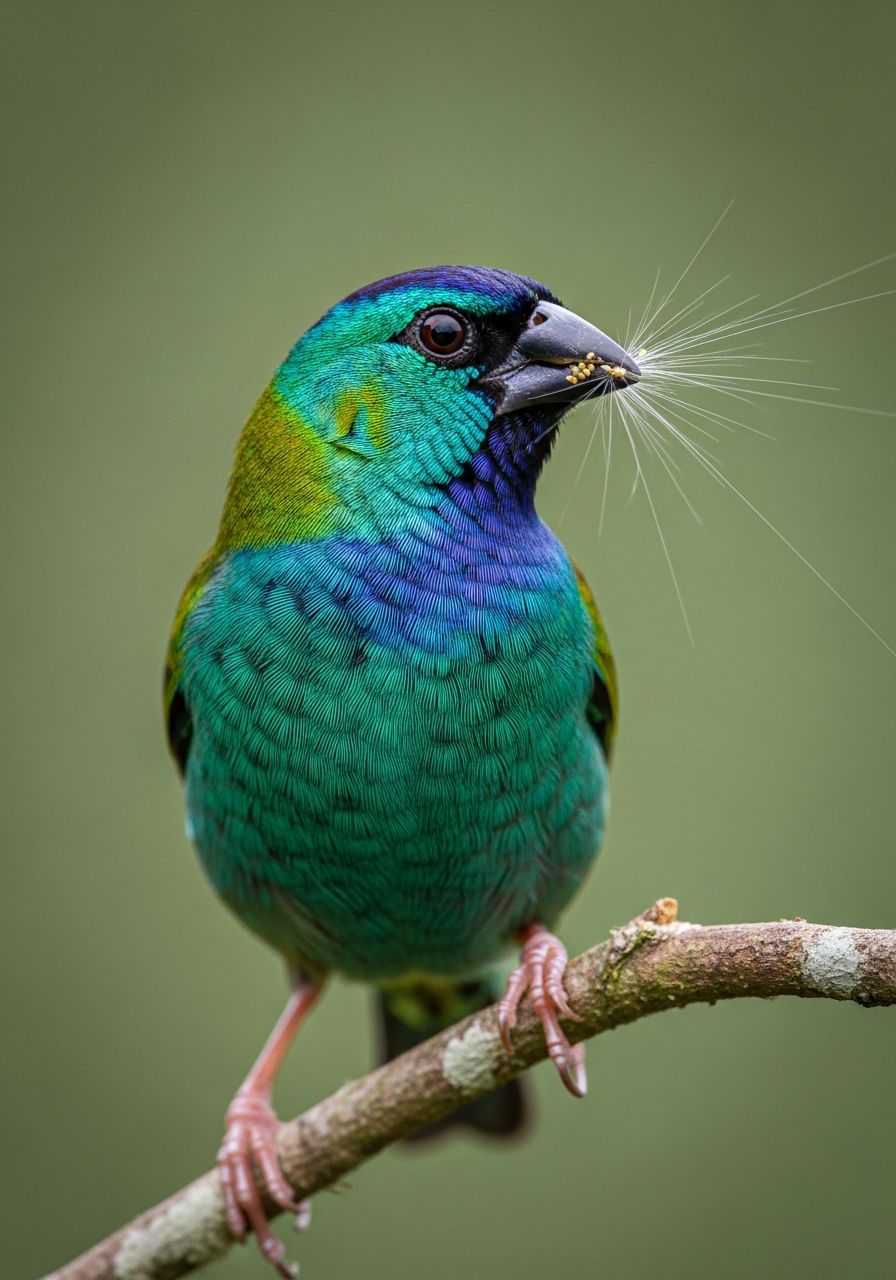
Textorala avispa
Weaverfinch
Field Report Summary
First observed in the cloud forests of Ecuador by Dr. Elena Rodriguez, the Weaverfinch exhibits a complex social structure centered around communal nest building. The 'silk' produced is incredibly strong, capable of withstanding harsh weather conditions and providing excellent camouflage.
Physical Description
The Weaverfinch is approximately the size of a sparrow, with iridescent green and blue plumage reminiscent of a Jewel Wasp. It possesses a finch-like beak adapted for seed consumption, but also has modified salivary glands that produce a strong, silk-like substance, extruded through spinnerets located near its beak. Its legs are slender and adapted for perching, and it has large, multifaceted eyes providing excellent vision.
Habitat
Cloud forests of the Andes Mountains, specifically in Ecuador and Colombia.
Dietary Behavior
Primarily granivorous, feeding on seeds and small fruits. They occasionally supplement their diet with small insects caught within their nests.
Evolutionary Origin
The Weaverfinch's unique traits are believed to have arisen due to a rare instance of horizontal gene transfer between a Finch species (Geospizini) and a yet unidentified wasp species carrying genes related to silk production. Epigenetic factors likely played a crucial role in stabilizing and expressing these genes across generations.