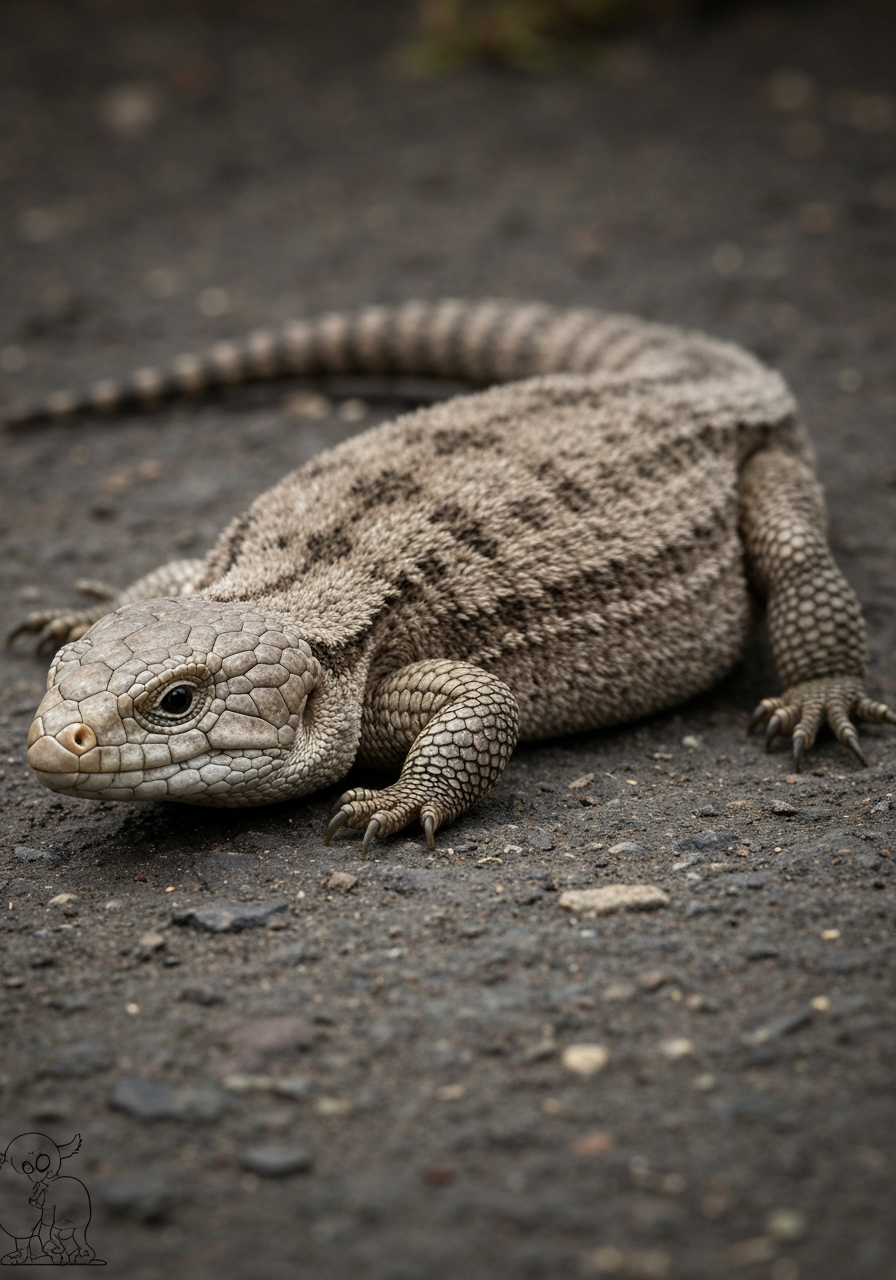
Lanamusc scincoides
Wooly Skink
Field Report Summary
Observations of *Lanamusc scincoides*, termed the 'Wooly Skink', remain scarce. Initially classified based on anecdotal reports from indigenous herders in the Altai Mountains, a recent expedition in 1888 confirmed its existence. Specimens exhibit a pronounced adaptation to frigid climates, possessing modified scales resembling sheep's wool, presumably providing thermal insulation. Further study is required to ascertain the precise composition of this integument and its effectiveness in retaining body heat. The skink appears to be largely herbivorous, judging from scat analysis, consuming alpine grasses and lichen. Its elusive nature and remote habitat present considerable challenges to comprehensive ecological assessment, leaving its population status and broader role within the mountainous ecosystem largely unknown. Continued exploration and cautious observation are paramount to understanding this remarkable reptile.
Physical Description
A large, robust skink approximately 1 meter long. Its scales are modified into dense, wool-like filaments, providing insulation against cold temperatures. The 'wool' is a mottled grey-brown color. It has short, sturdy legs and a thick tail. Its eyes are small and black, with thick, protective eyelids.
Habitat
High-altitude mountainous regions.
Dietary Behavior
Consumes small insects and roots.
Evolutionary Origin
Developed when a strange virus struck the skink population. The virus spliced the genome of a rare Wooly Lemur that was briefly residing in the area.
Behavioral Notes
The wool helps it traverse rocky terrains. It will intentionally cover itself in mud to create a natural sunscreen.